Kabab Tabei for a Post-Workout Meal
Make pan-seared kabab tabei with lean ground beef or turkey, then build a post-workout meal with a carbohydrate side and vegetables.
5 min read
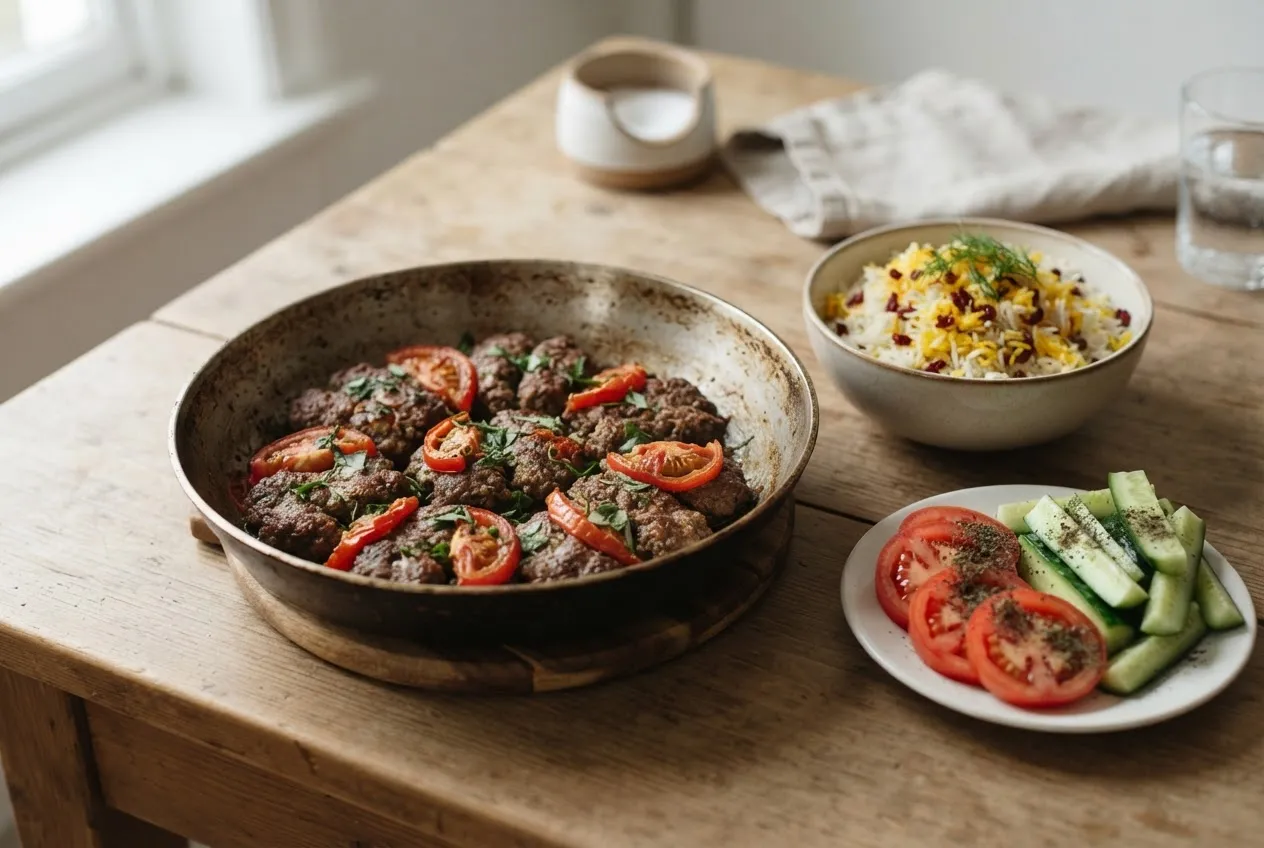
Kabab tabei can be part of a post-workout meal when you make it with lean ground beef or turkey and serve it with a carbohydrate food and vegetables. The meat provides protein, but the whole meal—and what you eat across the day—matter more than making one dish especially high in protein.
Make a simple pan-seared kabab
Kabab tabei is ground meat shaped and cooked in a pan. You do not need a special protein product to make it. Start with lean ground beef or ground turkey, onion, seasonings you like, and a small amount of oil for the pan if needed.
For a version you can adjust to your appetite:
Finely grate an onion and squeeze out some of its liquid. Mix the onion with the ground meat, black pepper, and seasonings such as turmeric or sumac.
Shape the mixture into thin, even patties or press it into an even layer in a pan. Even thickness makes it easier to check that the meat has cooked through.
Cook it in a skillet, turning patties as needed. Use a food thermometer in the thickest part rather than judging doneness by colour. Ground beef must reach 160°F (71°C); ground turkey, as ground poultry, must reach 165°F (74°C). These are the FoodSafety.gov minimum internal temperatures.
Serve the cooked kabab with rice or bread and vegetables, such as tomato and cucumber. Add more of any part of the meal if you need a larger serving.
Keep raw meat separate from foods you will eat without cooking, and wash your hands and utensils after handling it. The FoodSafety.gov food-safety steps cover these precautions. If you cook several servings, put leftovers away promptly rather than leaving the pan out for later.
If you are comparing ground beef options, the catalogue card can help you identify the food without relying on a protein number from a different cut or product.
26 g
Protein
0 g
Carbs
15 g
Fat
0 g
Fiber
Choose the meat without overthinking it
Lean ground beef and ground turkey are both practical choices for this dish. Check the package when you shop: the fat content of ground meat depends on the product you buy. Choose the one that suits your preferences and the rest of your meals, rather than treating turkey as automatically leaner than beef.
The United States Department of Agriculture MyPlate guidance recommends choosing lean or low-fat meat and poultry as part of a varied selection of protein foods. If you use a nonstick pan, you can start with a small amount of oil and add more only if the meat sticks. Do not rely on a dry-looking pan or a browned surface to tell you that ground meat is safe to eat; check its internal temperature.
Build the meal around your training
A plate of kabab alone does not cover every part of a post-workout meal. Add rice or bread for carbohydrate, and include vegetables that you enjoy. Carbohydrate intake matters for restoring fuel used during exercise, particularly when training sessions are long or close together. The joint Academy of Nutrition and Dietetics, Dietitians of Canada, and American College of Sports Medicine position paper discusses carbohydrate and protein needs in the context of the type and amount of exercise, rather than giving every exerciser the same post-workout plate.
For portion control, begin with an amount of kabab that fits your hunger and your other protein-containing meals. Then choose a rice or bread portion that makes the meal satisfying for the training you have done. You do not have to remove the carbohydrate side to make the meal suitable for exercise.
The protein in one serving also needs context. An International Society of Sports Nutrition position stand states that 1.4–2.0 grams of protein per kilogram of body weight per day is sufficient for most exercising individuals seeking to build or maintain muscle mass. That is a daily range for that population, not a target for one kabab meal or a requirement for everyone who goes to the gym. The position stand does not show that adding more meat to one meal will, by itself, improve your recovery.
If you finish training and will not eat a full meal right away, you can eat a normal meal when it fits your day. For more ways to combine familiar dishes and sides, see post-workout meals with Persian food. You do not need to label kabab tabei a special recovery food to include it in your routine.
Adjust it to your needs
A smaller appetite may call for a smaller kabab serving alongside rice or bread and vegetables. A larger appetite may call for more food. Neither serving has to be judged against someone else's plate. Consider your meals across the day rather than trying to make this one meal meet a daily protein target.
You can also change the seasonings without changing the basic approach: use lean ground meat, cook it thoroughly, and choose sides that make a complete meal for you. If you are preparing food for someone else, their needs and food-safety concerns may differ from yours.
The protein range above is not a plan to follow without individual advice if you are pregnant or breastfeeding, have a medical condition such as kidney disease, take medication that affects your diet, have an eating disorder, or are planning meals for a child or an older adult. A registered dietitian or other appropriate health professional can help put your activity and food needs in context.
When to see a professional
See a registered dietitian if you need help working out how much to eat for your training, especially if you have a medical condition or have been restricting food. Seek medical advice if you are unsure whether your condition or medication changes what is appropriate for you. Kabab tabei can be a useful meal, but a recipe cannot determine your individual nutrition needs.
Sources
The references behind the claims in this article.
- www.foodsafety.gov
Ground beef must reach 160°F (71°C); ground turkey, as ground poultry, must reach 165°F (74°C). A food thermometer is used to check the internal temperature.
- www.foodsafety.gov
Keep raw meat separate from ready-to-eat foods, wash hands and utensils after handling it, and refrigerate leftovers promptly.
- www.myplate.gov
MyPlate recommends choosing lean or low-fat meat and poultry as part of a varied selection of protein foods.
- pubmed.ncbi.nlm.nih.gov
The sports nutrition position paper discusses carbohydrate and protein intake in relation to exercise demands, including carbohydrate for restoring fuel after exercise.
- pmc.ncbi.nlm.nih.gov
The International Society of Sports Nutrition position stand says 1.4–2.0 grams of protein per kilogram of body weight per day is sufficient for most exercising individuals seeking to build or maintain muscle mass; it describes a daily intake, not a requirement for one meal.
Put it into your week
Build a free week of workouts and meals around your goal. No account needed.