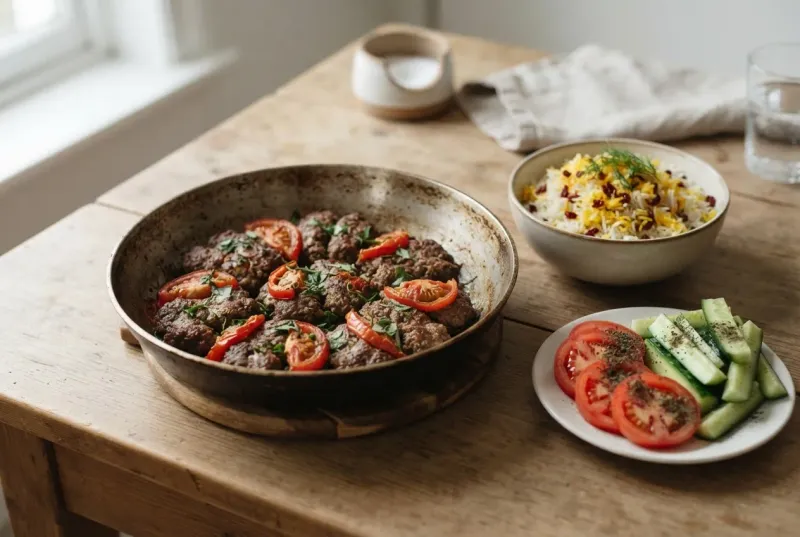
Post-workout meals with Persian food
Pair Persian staples such as mast-o-khiar, rice, lentils and eggs for a practical meal after training.
6 min read

A post-workout meal with Persian food can be simple: pair a protein-rich main with rice, bread, potatoes or another carbohydrate source. Mast-o-khiar can sit alongside that meal, but it does not need to carry the meal’s protein on its own.
What matters after training
Protein supports muscle protein synthesis after exercise. Carbohydrate helps replace the muscle glycogen used during exercise. A meal containing both is a practical choice, especially if you train hard or plan to train again soon. The International Society of Sports Nutrition (ISSN) position stand on nutrient timing discusses both goals, but it does not identify one required Persian dish or one ideal plate. ISSN nutrient timing ISSN protein and exercise
You do not need to treat the end of a workout as a deadline for eating. Your earlier meals, your overall protein intake and the time until your next session matter too. The ISSN protein position stand says that the muscle-building response to exercise lasts beyond the workout itself and that spreading protein intake across the day matters. ISSN protein and exercise
Replacing glycogen quickly matters most when there is little time between demanding sessions. Adding protein to a meal is useful for its own role in recovery, but it does not mean that you can ignore the carbohydrate portion. It also does not mean that adding more protein always improves glycogen replacement when carbohydrate intake is already adequate. ISSN nutrient timing
Give mast-o-khiar a supporting role
Mast-o-khiar combines yogurt and cucumber. Its contribution to protein depends on the yogurt and how much you serve; cucumber is not a substantial protein source. If mast-o-khiar is a small side dish, pair it with a main that supplies more protein rather than counting the side as your whole recovery meal. Food composition entries can help you compare the ingredients you actually use. USDA FoodData Central
For example, serve mast-o-khiar with an egg dish and bread, or with chicken and rice. Lentils are another option: they contribute both protein and carbohydrate, although their protein content differs from that of eggs or chicken. The point is not to make every plate identical. It is to check that the meal includes a meaningful protein source and enough carbohydrate for your training needs. USDA FoodData Central ISSN nutrient timing
Plain yogurt, thick yogurt and strained yogurt do not necessarily provide the same amount of protein in the same serving. Look at the label if protein content is important to your plan. Adding a larger bowl of mast-o-khiar can change what the side contributes, but you can also keep the side as you enjoy it and get protein from the main. USDA FoodData Central
Three ways to build the meal
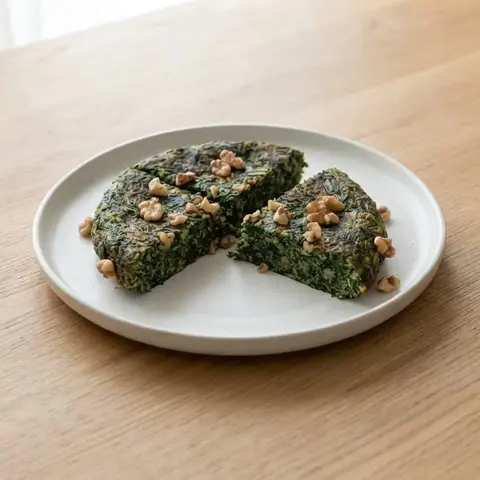
Eggs, bread and mast-o-khiar
Kuku sabzi is a Persian herb frittata made with eggs. Put it beside bread and mast-o-khiar for a meal with a protein source and a carbohydrate source. The eggs are the main protein source here; the bread supplies carbohydrate. If your portion of kuku sabzi is small, consider whether another protein-containing food belongs on the plate. USDA FoodData Central
18 g
Protein
10 g
Carbs
27 g
Fat
4 g
Fiber
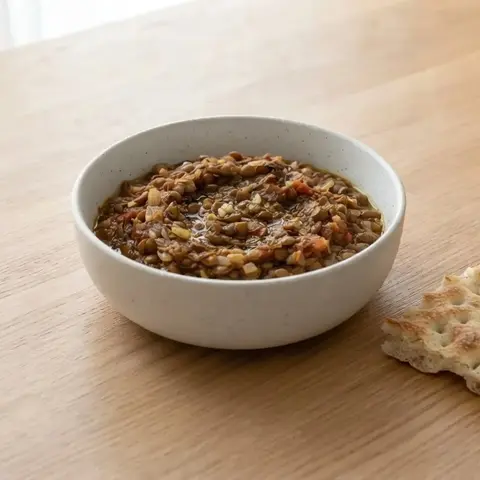
Lentil stew with bread or rice
Adasi is a lentil stew. Lentils supply both protein and carbohydrate, so adasi can form the centre of a post-workout meal. Bread or rice can add carbohydrate when you need a larger meal. Mast-o-khiar can be a side if you want it; it is not a required recovery ingredient. USDA FoodData Central
13 g
Protein
47 g
Carbs
9 g
Fat
10 g
Fiber
Tomato rice with a protein-rich main
Dami gojeh gives you a rice-based starting point. Serve it with a protein-rich main, such as eggs or chicken, rather than assuming the rice dish alone covers both parts of the meal. Add mast-o-khiar if you enjoy the contrast. Rice supplies carbohydrate, while eggs and chicken supply protein. USDA FoodData Central

6 g
Protein
44 g
Carbs
6 g
Fat
2 g
Fiber
These are meal patterns, not prescriptions. The amount that fits depends on your appetite, the rest of your day and what your training session involved. Sports nutrition guidance describes a range of needs; it does not establish a single serving size for everyone who eats after exercise. ISSN nutrient timing ISSN protein and exercise
Adjust for the time until your next session
If you have another demanding session soon, give the carbohydrate part of the meal more attention. The ISSN nutrient-timing position stand places particular emphasis on rapid glycogen replacement when recovery time is short. Rice, bread and potatoes are familiar ways to include carbohydrate; choose the foods and portions that fit the rest of your eating. ISSN nutrient timing USDA FoodData Central
If your next workout is not soon, you have more flexibility. An ordinary meal with protein and carbohydrate can do the job without a special recipe, supplement or rigid eating window. The evidence supports paying attention to overall intake as well as meal timing; it does not show that one traditional side dish makes recovery better than another. ISSN nutrient timing ISSN protein and exercise
You can also consider what you ate before training. Someone who ate a substantial meal before exercise is in a different position from someone who has not eaten for many hours. That is one reason to use the next meal as part of your whole day, rather than trying to judge it in isolation. ISSN nutrient timing
Keep the meal practical
Start with the main food you want to eat. Ask whether it provides protein. Then ask whether the plate has a carbohydrate source that suits your next training session. Use mast-o-khiar for its place in the meal, not as a test the meal has to pass.
No supplement is necessary just because you exercised. The ISSN protein position stand says active people can meet protein needs through ordinary foods, while supplements can be a convenient option in some circumstances. Food is a reasonable first place to start. ISSN protein and exercise
When to see a professional
If you are pregnant or breastfeeding, have kidney disease or diabetes, take medication affected by meal timing, or have an eating disorder, ask a qualified clinician or dietitian before making performance-focused changes to your eating. Seek individual guidance for a child or an older adult rather than applying general sports nutrition guidance unchanged.
Sources
The references behind the claims in this article.
- pubmed.ncbi.nlm.nih.gov
The 2017 ISSN position stand on nutrient timing discusses carbohydrate intake for glycogen replacement, protein and carbohydrate after exercise, short recovery periods between sessions, and how timing fits with overall intake.
- pubmed.ncbi.nlm.nih.gov
The 2017 ISSN position stand on protein and exercise discusses muscle protein synthesis, protein distribution across the day, the period of response after exercise, and meeting protein needs through food or, for convenience, supplements.
- fdc.nal.usda.gov
verify: USDA FoodData Central (2019), food composition entries for plain and strained yogurt, cucumber, eggs, cooked lentils, cooked rice, bread, potatoes and chicken; these support the qualitative comparisons of protein and carbohydrate sources in the meal examples.
Put it into your week
Build a free week of workouts and meals around your goal. No account needed.