How to Increase NEAT for Fat Loss
NEAT is the energy you use moving outside planned exercise. Learn how everyday movement can support fat loss without replacing your training plan.
5 min read
Increasing everyday movement can help with fat loss, but it does not replace a sustainable eating plan or planned exercise. This movement is often called non-exercise activity thermogenesis, or NEAT.
NEAT is the energy you use for movement that is not a planned workout. Walking to do an errand, moving around your home and doing household tasks are examples. NEAT is one part of your daily energy expenditure, alongside the energy your body uses at rest, the energy used to digest food and the energy used during exercise.
The useful question is not how to keep moving every minute. It is whether your day has reasonable chances to move, especially if you spend much of it sitting.
How much does NEAT matter?
NEAT can vary between people and between days. A research study found that changes in NEAT differed among participants who were given extra food. It does not tell you how many calories your own daily movement will use, or how much weight you will lose by moving more.
For fat loss, increased movement can contribute to the energy balance that matters over time. It is not a way to cancel out a particular meal. You also do not need to estimate the calories used by every chore or walk to make the idea useful.
Think of NEAT as a complement to training. A workout may take up one part of your day; everyday movement happens around it. Adding movement outside the gym need not mean adding another hard session.
Ways to move more during an ordinary day
Start with opportunities that fit your schedule and your ability. Pick one change you can repeat rather than trying to change the whole day at once.
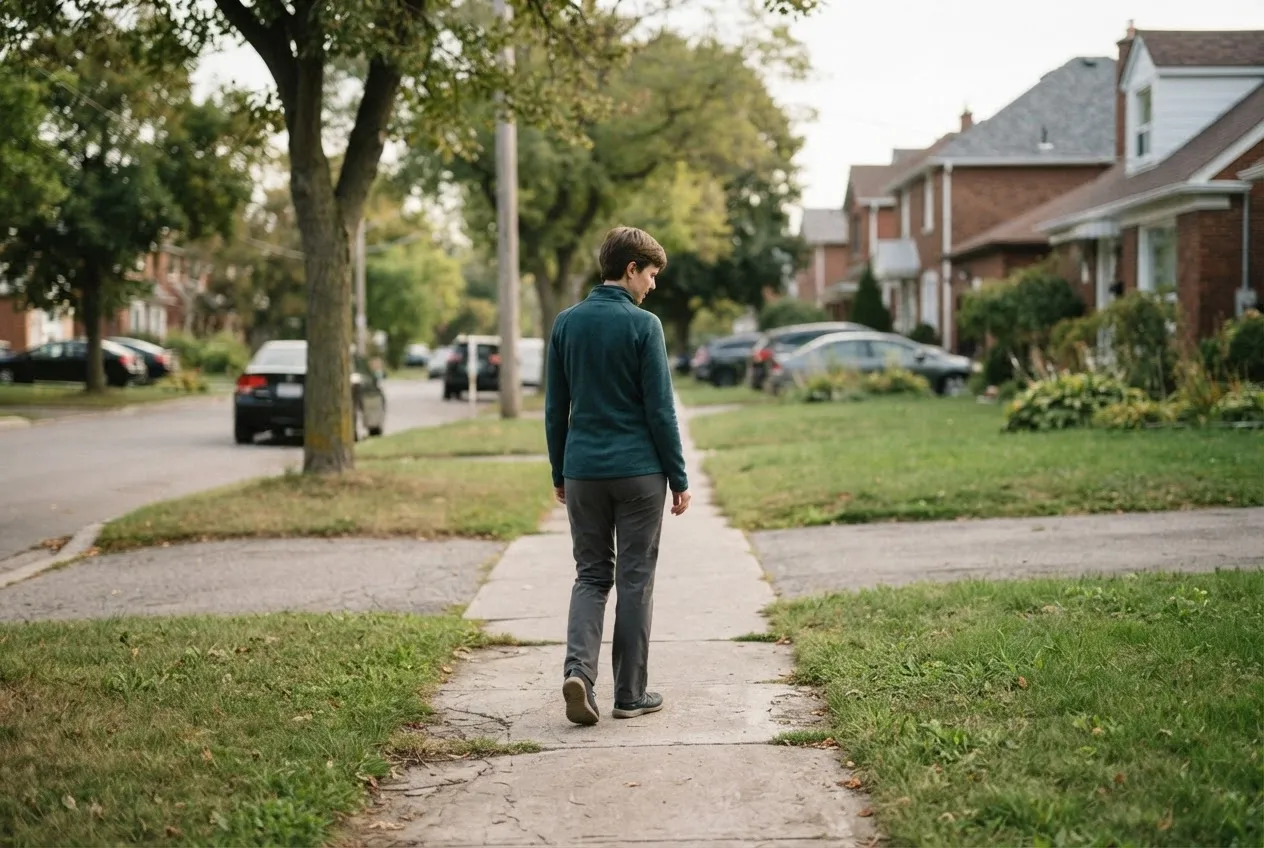
Walk for part of an errand if the route is safe and practical.
Take a short walk during a break that you would otherwise spend sitting.
Stand up and move around between stretches of desk work.
Do a household task that involves moving, such as tidying or carrying laundry.
Take the stairs for a comfortable part of a journey, if stairs work for you.
Pace while making a phone call when you have space to do so safely.
These are options, not requirements. A person with limited mobility may have different opportunities to move. The aim is to find movement that suits your circumstances, not to copy someone else's daily step count.
You can make the change easier by attaching it to something you already do. For example, you might walk for a few minutes after finishing work or move around before sitting down to a call. If the change makes your day harder to manage, try a smaller one.
NEAT is not the same as a workout
A walk can be planned exercise, everyday transport or both, depending on how you use it. The label matters less than the movement itself. You do not need to classify every minute perfectly.
Everyday movement also should not become a reason to skip strength training or other activity you value. The World Health Organization recommends that adults do regular aerobic physical activity and muscle-strengthening activity. It also advises limiting sedentary time and replacing it with physical activity of any intensity, including light activity.
That guidance supports making room for movement across the day. It does not mean standing all day, taking every staircase or treating sitting as a failure. Rest and sitting are ordinary parts of life.
How to tell whether a change is useful
Choose a change you can observe without turning your day into a calculation. You could note whether you took a walk on a work break or got up between long periods of sitting. The point is to see whether the routine is practical.
Avoid assigning a precise calorie value to that change. Energy use differs with the person, the task and how long it lasts. An estimate on a device is not a promise of fat loss.
If your weight trend is not changing as expected, do not assume that NEAT is the missing piece. Eating patterns, activity and changes in body weight all affect energy balance. Review the wider pattern before making a large change. What to Do When Weight Loss Stalls covers that decision in more detail.
More movement should still leave room for meals and recovery. If managing hunger is making your plan difficult, How to Stay Full While Cutting focuses on the eating side rather than asking you to move constantly.
If movement hurts
Do not push through an injury to raise your activity. Reduce the load or duration, and change the movement. For example, choose a comfortable, level route instead of stairs, or shorten a walk. If that still hurts, stop that activity.
Do not follow these movement suggestions without individual guidance if you have a medical condition, an injury that is getting worse, or an eating disorder; children, older adults, and people who are pregnant or breastfeeding may also need advice suited to them.
When to see a professional
See a healthcare professional if movement brings sharp or worsening pain, numbness, swelling or pain at night, or if pain began after a fall. Ask for individual advice if you are unsure which activities are safe with an existing condition or injury.
Sources
The references behind the claims in this article.
- pubmed.ncbi.nlm.nih.gov
verify: Role of nonexercise activity thermogenesis in resistance to fat gain in humans (1999). Supports the description of NEAT as energy expenditure from activity outside planned exercise and the finding that NEAT responses differed among participants given extra food.
- www.who.int
Supports the statements that adults are advised to do aerobic and muscle-strengthening activity, that physical activity of any intensity counts, and that replacing sedentary time with physical activity has benefits.
- www.niddk.nih.gov
Supports the discussion of body-weight change in relation to energy intake and expenditure and why one movement change cannot promise a particular weight-loss result.
- www.nhs.uk
Supports stopping or modifying activity when an injury is painful and seeking help for concerning symptoms such as worsening pain, swelling or numbness.
- www.nhs.uk
Supports seeking medical assessment for pain that worsens, occurs at night or begins after an injury such as a fall.
Put it into your week
Build a free week of workouts and meals around your goal. No account needed.